
 Image 1 of 1
Early Sunflower (often called False Sunflower or Oxeye Sunflower) is a champion of the "pre-autumn" season. While it looks remarkably like a true sunflower, it’s actually a distinct native perennial that is far more manageable and long-lived in a garden setting.
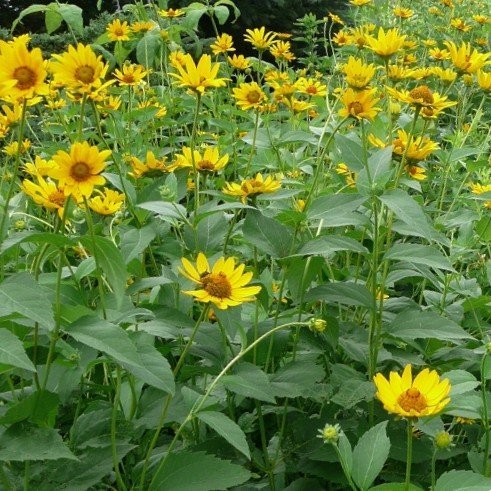
A cheerful, multi-stemmed native that produces a profusion of daisy-like yellow flowers. It is one of the longest-blooming perennials in the summer garden, often starting its show weeks before the rest of the sunflower family.
Sun Exposure: full sun to partial shade (best in full sun)
Water Needs: low to medium; drought-tolerant once established
Soil Type: adaptable; thrives in clay, loam, sand, or rocky soil
Mature Height: 3 – 5 feet
Deer Resistance: moderate
Bloom Time: June – September
Bloom Color: yellow
Plant Spacing: 1.5 – 3 feet
Prolific Bloomer: Unlike true sunflowers that bloom once, this species is "deadhead friendly"—removing spent flowers will keep the gold coming all summer long.
Sturdy & Reliable: While it can get tall, its stems are generally stiffer than true sunflowers.However, in very rich soil, it can become "leggy," so it's actually happier in leaner, average soil.
Clump-Forming: It stays where you put it! Unlike some aggressive spreaders, this species grows in a tidy, non-invasive clump that increases in diameter over time.
Specialist Pollinator Support: It is a critical host for the Holcopasites heliopis bee—a tiny specialist pollinator that relies specifically on this plant.
Bird Buffet: If you leave the seed heads standing in the fall, they become a favorite snack for goldfinches and other small songbirds.
Pro Tip: Try planting Early sunflower with purple-blooming companions like Blazing Star or Ironweed that would contrast beautifully with all that yellow.
Early Sunflower (often called False Sunflower or Oxeye Sunflower) is a champion of the "pre-autumn" season. While it looks remarkably like a true sunflower, it’s actually a distinct native perennial that is far more manageable and long-lived in a garden setting.
A cheerful, multi-stemmed native that produces a profusion of daisy-like yellow flowers. It is one of the longest-blooming perennials in the summer garden, often starting its show weeks before the rest of the sunflower family.
Sun Exposure: full sun to partial shade (best in full sun)
Water Needs: low to medium; drought-tolerant once established
Soil Type: adaptable; thrives in clay, loam, sand, or rocky soil
Mature Height: 3 – 5 feet
Deer Resistance: moderate
Bloom Time: June – September
Bloom Color: yellow
Plant Spacing: 1.5 – 3 feet
Prolific Bloomer: Unlike true sunflowers that bloom once, this species is "deadhead friendly"—removing spent flowers will keep the gold coming all summer long.
Sturdy & Reliable: While it can get tall, its stems are generally stiffer than true sunflowers.However, in very rich soil, it can become "leggy," so it's actually happier in leaner, average soil.
Clump-Forming: It stays where you put it! Unlike some aggressive spreaders, this species grows in a tidy, non-invasive clump that increases in diameter over time.
Specialist Pollinator Support: It is a critical host for the Holcopasites heliopis bee—a tiny specialist pollinator that relies specifically on this plant.
Bird Buffet: If you leave the seed heads standing in the fall, they become a favorite snack for goldfinches and other small songbirds.
Pro Tip: Try planting Early sunflower with purple-blooming companions like Blazing Star or Ironweed that would contrast beautifully with all that yellow.